
Alumina Rectangular Trays
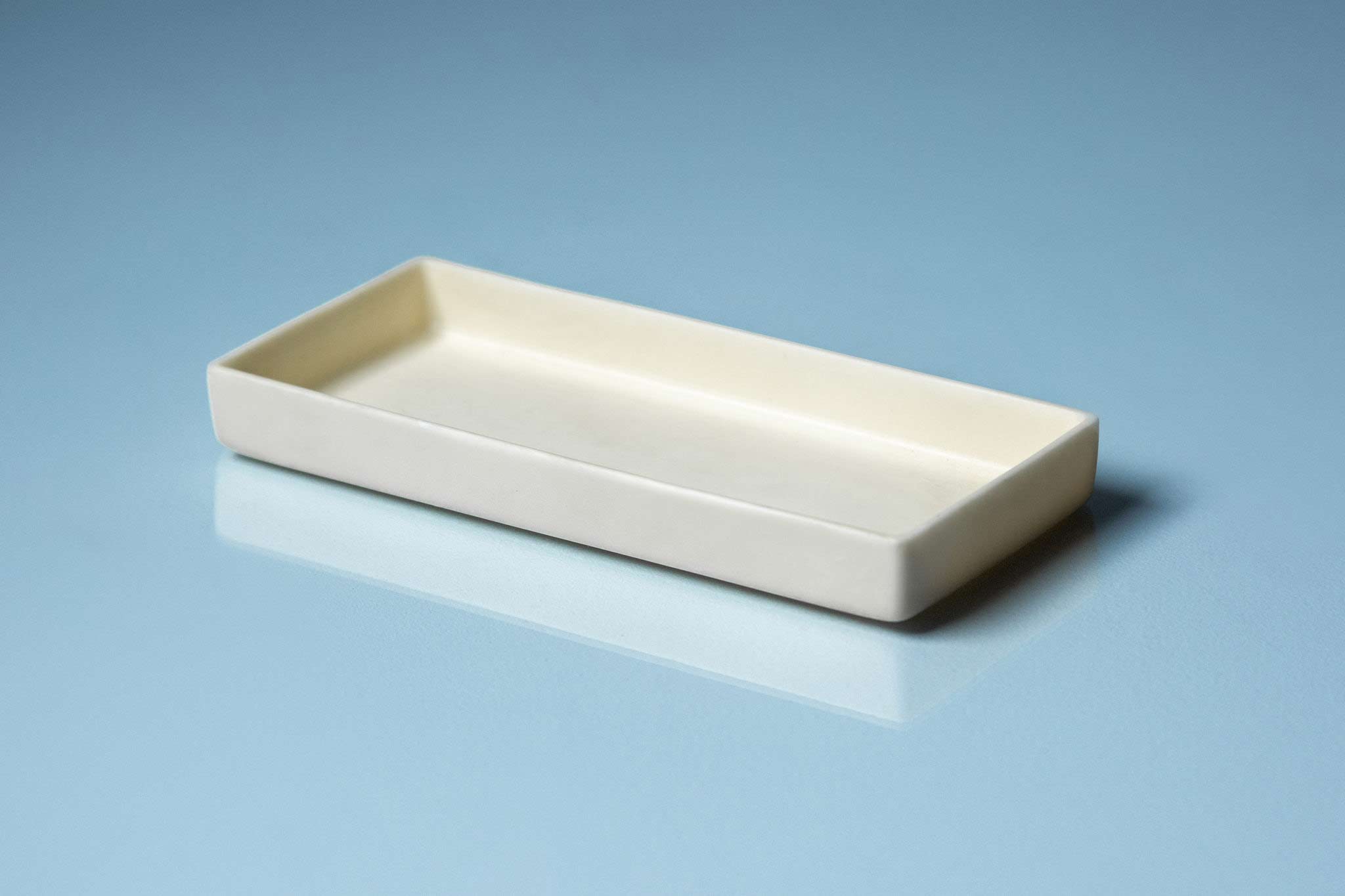
| ITEM# RCT | CAPACITY (ML) | LENGTH (mm) | WIDTH (mm) | HEIGHT (mm) |
|---|---|---|---|---|
| RT0015 | 1.5 | 25 | 15 | 5 |
| RT005-1 | 5 | 40 | 30 | 6 |
| RT005-2 | 5 | 30 | 20 | 10 |
| RT010 | 10 | 36 | 25 | 15 |
| RT013 | 13 | 60 | 40 | 8 |
| RT025 | 25 | 50 | 38 | 20 |
| RT032 | 32 | 75 | 50 | 11 |
| RT050 | 50 | 65 | 42 | 25 |
| RT064 | 64 | 100 | 45 | 19 |
| RT100 | 100 | 80 | 56 | 30 |
| RT140 | 140 | 150 | 65 | 19 |
| RT150 | 150 | 90 | 64 | 35 |
| RT250 | 250 | 100 | 70 | 45 |
| RT340 | 340 | 200 | 90 | 25 |
| RT500 | 500 | 150 | 80 | 55 |
| RT750-1 | 750 | 188 | 140 | 42 |
| RT750-2 | 750 | 180 | 100 | 60 |
| RT1000 | 1000 | 190 | 110 | 60 |
| RT1500 | 1500 | 200 | 130 | 70 |
| RT2000 | 2000 | 210 | 140 | 80 |
| ITEM# RCT | CAPACITY (ML) | LENGTH (mm) | WIDTH (mm) | HEIGHT (mm) |
Industries using alumina rect. trays
Their flat, rectangular shape maximizes surface area, making them ideal for industrial and laboratory processes. Below is a list of key industries that rely on alumina rectangular trays for their operations.
Industries Using Alumina Rectangular Trays
- Materials Science Research: Alumina rectangular trays are used in laboratories for sintering, annealing, and testing advanced materials like ceramics, composites, and nanomaterials. Their high purity ensures contamination-free results critical for precise experiments.
- Chemical Industry: These trays support calcination, drying, and thermal processing of chemical compounds, resisting corrosion from acids, alkalis, and other reactive substances, ensuring reliable outcomes.
- Metallurgy: In metal processing, alumina trays are employed for heat treatment, melting, and assaying of metals, including precious and refractory metals like gold, platinum, and tungsten, due to their thermal and chemical stability.
- Semiconductor Manufacturing: The trays are used for wafer annealing and chemical vapor deposition (CVD) processes, where their inertness prevents contamination of sensitive electronic components.
- Ceramics Manufacturing: Alumina trays are essential for firing and sintering ceramic powders and components, maintaining structural integrity under extreme temperatures and supporting high-volume production.
- Glass Industry: These trays facilitate the melting and shaping of specialty glasses, such as borosilicates, withstanding high temperatures and corrosive fluxes for consistent glass production.
- Academic and Laboratory Research: Universities and research labs use alumina trays for high-temperature experiments, such as thermal analysis and material synthesis, leveraging their capacity to handle multiple samples efficiently.
Why Choose LSP Ceramics’ Alumina Rectangular Trays?
LSP Industrial Ceramics offers high-purity alumina rectangular trays tailored to diverse industrial and laboratory needs. Available in various sizes and customizable for specific applications, these trays are carefully handled to ensure quality during storage and shipping. With excellent thermal conductivity, chemical resistance, and robust construction, they are a trusted choice for professionals seeking reliable performance in demanding environments.
Optimized Surface Area for Thermal Processing
The flat, rectangular design of alumina trays maximizes usable surface area, making them ideal for processes that require uniform heating and efficient sample distribution. This geometry supports consistent results in both laboratory and industrial environments.
Durability Under Extreme Conditions
Alumina trays are engineered to withstand temperatures exceeding 1700°C while resisting chemical corrosion. Their robust construction ensures long service life even in aggressive atmospheres, reducing replacement costs and improving operational reliability.
Flexible Capacities and Configurations
With options ranging from 1.5 ml to 2000 ml, alumina rectangular trays can accommodate small scale research experiments as well as large volume industrial production. Their versatility makes them suitable for diverse applications across multiple industries.
Trusted For High Purity Applications
The high alumina content ensures contamination free processing, good for industries such as semiconductors, advanced ceramics, and specialty glass manufacturing. This purity supports the production of materials where precision and reliability are required.
FAQ
What Temperature Range Can Alumina Rectangular Trays Handle?
They can withstand temperatures up to 1700°C, making them suitable for extreme heat applications.
Why Are Alumina Trays Preferred in Semiconductor Manufacturing?
Their chemical inertness prevents contamination during wafer annealing and CVD processes.
Can Alumina Rectangular Trays Be Customized?
Yes. They are available in multiple sizes and can be tailored to specific industrial or laboratory requirements.
What Industries Commonly Use Alumina Rectangular Trays?
Materials science, metallurgy, chemical processing, ceramics, semiconductors, and glass manufacturing rely on them for precision work.