
Electrical Insulation in High-Voltage Systems
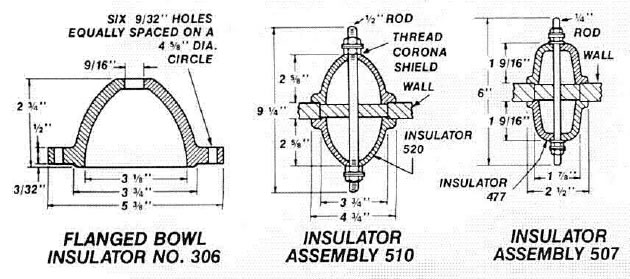
Steatite hollow pair lead-ins, offered by LSP Industrial Ceramics, are critical components in the electrical industry, particularly for high-voltage applications. These lead-ins provide optimal insulation when passing electrical conductors through conductive panels, ensuring safety and reliability in systems like transformers, condensers, and switchgear. Their outstanding dielectric properties, derived from steatite’s magnesium silicate composition, prevent unwanted current flow and short circuits, even under high voltages. Available in standard shapes and sizes with a shoulder for precise mounting, they can be paired with nickel-dipped metal fittings or polymer gaskets for airtight installations, making them indispensable in power generation, telecommunications, and industrial machinery.
Versatile Applications Across Industries
The versatility of steatite hollow pair lead-ins extends beyond electrical systems to industries such as aerospace, defense, and scientific research. Their high thermal stability and low thermal conductivity allow them to withstand extreme temperatures, making them ideal for use in ovens, furnaces, and high-temperature testing equipment. Conforming to MIL-I-23264 specifications, these lead-ins are customizable with white or brown glaze and permanent markings, ensuring durability in harsh environments. For example, in aerospace, they insulate wiring in control panels, while in research labs, they support thermocouples and cabling, demonstrating their adaptability to diverse, demanding applications.
Enhanced Durability and Customization
LSP’s steatite hollow pair lead-ins are engineered for durability and precision, with a manufacturing process that includes high-temperature firing (2372°F–2732°F) to create dense, non-porous ceramics. This ensures excellent mechanical strength, thermal shock resistance, and chemical inertness, critical for long-term performance in corrosive or high-stress environments like chemical processing plants. LSP offers custom designs, allowing industries to specify dimensions, mounting configurations, and hardware, such as threaded holes or metal shackles, to meet unique project needs. With over 30 years of experience, LSP’s rapid quote turnaround (within 48 hours) and extensive inventory make it a trusted partner for industries seeking reliable, tailored Steatite Hollow Pair Lead-Ins.
Performance Requirements for Hollow Pair Lead-Ins
Hollow pair lead-ins must maintain electrical separation when conductors pass through conductive panels in high-voltage systems. Their performance depends on stable dielectric behavior, uniform ceramic density, and reliable mounting alignment. The shoulder at the base helps maintain centered positioning in the panel opening, supporting consistent spacing and reducing the chance of unintended current paths. In systems with elevated voltage, the insulator must resist thermal variation and mechanical stress while maintaining its insulating properties.
Material and Construction Considerations
Steatite ceramic provides rigidity, electrical resistance, and dimensional stability under load. The fired body must achieve a dense structure that limits porosity and supports long-term insulation. Glazed surfaces help maintain resistance in environments with humidity or airborne particles. Metal fittings must be bonded securely to the ceramic body to ensure stable attachment points, and polymer gaskets may be used when airtight performance is required. Shape variations such as conical, bell, or bowl profiles support different mounting and clearance requirements.
Fit for Electrical and Mechanical Applications
- Panel pass-throughs — Supports conductors that must pass through grounded or conductive barriers.
- High-voltage spacing — Helps maintain separation in systems with elevated voltage.
- Airtight installations — Polymer gaskets assist with sealed configurations.
- Shape-specific setups — Conical, bell, and bowl profiles support varied clearance and mounting needs.
FAQ
How Does the Shoulder Improve Mounting Stability?
The shoulder helps center the insulator in the panel opening, supporting consistent alignment and spacing.
Are Metal Fittings Important for Mechanical Support?
Yes. Metal fittings provide stable attachment points and help maintain conductor positioning through the panel.
What Applications Benefit from Hollow Pair Lead-Ins?
They are suited for assemblies that require electrical separation when conductors pass through conductive barriers.
Do Shape Variations Affect Performance?
Yes. Conical, bell, and bowl profiles support different clearance, mounting, and alignment requirements.