
Posts
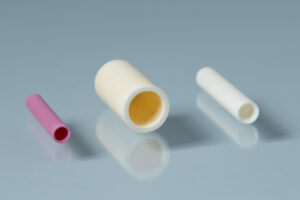
Ceramic eye posts manufactured by LSP Industrial Ceramics provide a rigid, dimensionally stable interface for applications requiring precise alignment, electrical isolation, and thermal durability. Unlike tubular eyelets designed primarily for feed through passages, eye posts function as solid or semi solid alignment structures with a controlled bore and extended body length. These components are used in semiconductor equipment, analytical instruments, aerospace assemblies, high temperature furnaces, and industrial machinery where metals or polymers cannot maintain stability under heat, voltage, or corrosive exposure. Their geometry supports consistent guidance for wires, probes, pins, or mechanical elements while maintaining insulation between conductive components and surrounding structures.
Material Behavior and Structural Performance in Eye Posts
Ceramic eye posts maintain dimensional accuracy under thermal cycling, electrical load, and mechanical stress. Their insulating properties prevent electrical bridging in assemblies where conductive elements pass through metallic housings. Hardness supports stable alignment, while resistance to oxidation and contamination ensures long term reliability in demanding environments.
Dimensional Variables That Influence Eye Post Selection
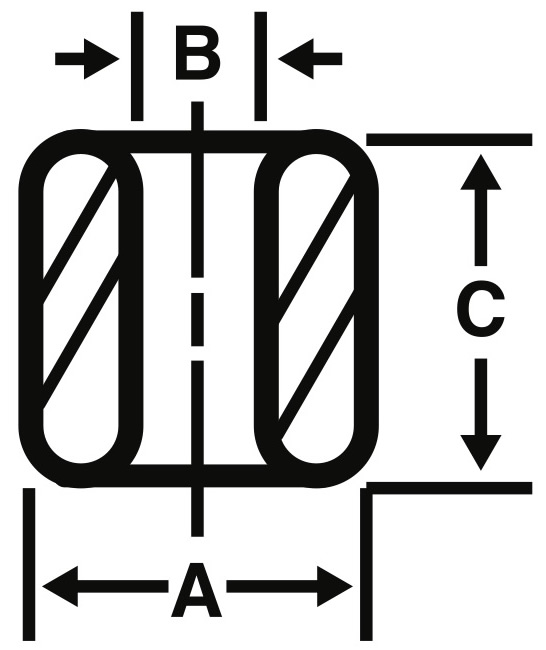
Several geometric factors shape how an eye post performs in an assembly:
- Bore diameter determines clearance and guidance for wires, pins, or probes.
- Outer diameter influences seating stability and retention within housings.
- Length affects alignment behavior across multi layer structures or deep mounting points.
These variables help engineers match eye posts to specific electrical, thermal, or mechanical requirements.
Integration With Fixtures, Housings, and Multi Layer Assemblies
Eye posts must be matched to the geometry and material of the surrounding structure. Seating depth, hole tolerance, and thermal expansion behavior influence how the post performs under load. Proper integration ensures stable alignment, predictable dielectric spacing, and consistent performance across repeated heating and cooling cycles. This is especially important in assemblies where the post interfaces with metals, ceramics, or composite insulators.
Alignment Stability and Long Run Performance in High Temperature Systems
Eye post stability depends on the relationship between bore size, outer diameter, and length. Longer posts provide extended guidance for probes or wires, while shorter versions support compact assemblies. Ceramic’s dimensional stability under heat ensures consistent alignment across long production runs, reducing variability in applications that rely on precise feed through or positioning behavior.
FAQ
How Do Bore Dimensions Affect Eye Post Performance?
Bore size determines clearance and guidance behavior, influencing how wires or probes move within the assembly.
Why Does Outer Diameter Matter in Eye Post Selection?
Outer diameter affects seating stability and retention, shaping how securely the post fits within the surrounding structure.
What Role Does Length Play in High Temperature Assemblies?
Length influences how the post interfaces with housings or multi layer components, affecting alignment and dielectric spacing.
Segmenting by dimension will alter the order of part numbers.
| A (in) | A (mm) | B (in) | B (mm) | C (in) | C (mm) | |
|---|---|---|---|---|---|---|
| TP000 | 1 | 2 | 3 | 4 | 5 | 6 |
| TP090 | 0.079 | 2 | 0.047 | 1.2 | 0.984 | 25 |
| TP090X27 | 0.079 | 2 | 0.047 | 1.2 | 1.063 | 27 |
| TP090X27-1 | 0.079 | 2 | 0.039 | 1 | 1.063 | 27 |
| TP100 | 0.158 | 4 | 0.087 | 2.2 | 0.433 | 11 |
| TP102 | 0.197 | 5 | 0.122 | 3.1 | 0.315 | 8 |
| TP104 | 0.221 | 5.6 | 0.122 | 3.1 | 0.788 | 20 |
| TP106 | 0.232 | 5.9 | 0.146 | 3.7 | 0.473 | 12 |
| TP108 | 0.236 | 6 | 0.087 | 2.2 | 0.477 | 12.1 |
| TP110 | 0.236 | 6 | 0.118 | 3 | 0.552 | 14 |
| TP112 | 0.268 | 6.8 | 0.158 | 4 | 0.63 | 16 |
| TP115 | 0.307 | 7.8 | 0.162 | 4.1 | 0.552 | 14 |
| TP120 | 0.307 | 7.8 | 0.197 | 5 | 0.591 | 15 |
| TP125 | 0.307 | 7.8 | 0.162 | 4.1 | 0.788 | 20 |
| TP130 | 0.335 | 8.5 | 0.244 | 6.2 | 0.65 | 16.5 |
| TP134 | 0.374 | 9.5 | 0.248 | 6.3 | 0.63 | 16 |
| TP138 | 0.374 | 9.5 | 0.221 | 5.6 | 0.394 | 10 |
| TP140 | 0.374 | 9.5 | 0.221 | 5.6 | 0.788 | 20 |
| TP142 | 0.374 | 9.5 | 0.248 | 6.3 | 0.591 | 15 |
| TP144 | 0.382 | 9.7 | 0.217 | 5.5 | 0.394 | 10 |
| TP144-1 | 0.386 | 9.8 | 0.217 | 5.5 | 0.973 | 24.7 |
| TP145 | 0.386 | 9.8 | 0.217 | 5.5 | 1.1 | 28 |
| TP145-1 | 0.394 | 10 | 0.221 | 5.6 | 1.25 | 31.7 |
| TP146 | 0.39 | 9.9 | 0.217 | 5.5 | 0.867 | 22 |
| TP146-1 | 0.374 | 9.5 | 0.201 | 5.1 | 0.812 | 20.6 |
| TP146-2 | 0.315 | 8 | 0.217 | 5.5 | 0.788 | 20 |
| TP146-3 | 0.394 | 10 | 0.197 | 5 | 0.985 | 25 |
| TP147 | 0.386 | 9.8 | 0.217 | 5.5 | 0.626 | 15.9 |
| TP147-2 | 0.386 | 9.8 | 0.217 | 5.5 | 0.788 | 20 |
| TP149 | 0.386 | 9.8 | 0.236 | 6 | 1.1 | 28 |
| TP150 | 0.386 | 9.8 | 0.236 | 6 | 0.946 | 24 |
| TP152 | 0.386 | 9.8 | 0.236 | 6 | 1.08 | 27.5 |
| TP154 | 0.386 | 9.8 | 0.236 | 6 | 0.788 | 20 |
| TP156 | 0.386 | 9.8 | 0.213 | 5.4 | 0.788 | 20 |
| TP158 | 0.392 | 9.95 | 0.256 | 6.5 | 0.985 | 25 |
| TP160 | 0.392 | 9.95 | 0.256 | 6.5 | 0.788 | 20 |
| TP161-4 | 0.39 | 9.9 | 0.118 | 3 | 0.551 | 14 |
| TP162 | 0.394 | 10 | 0.236 | 6 | 1.1 | 28 |
| TP164 | 0.394 | 10 | 0.217 | 5.5 | 0.788 | 20 |
| TP166 | 0.398 | 10.1 | 0.276 | 7 | 0.867 | 22 |
| TP170 | 0.414 | 10.5 | 0.256 | 6.5 | 0.985 | 25 |
| TP172 | 0.429 | 10.9 | 0.256 | 6.5 | 0.591 | 15 |
| TP174 | 0.485 | 12.3 | 0.331 | 8.4 | 0.906 | 23 |
| TP176 | 0.5 | 12.7 | 0.25 | 6.35 | 1.5 | 38.1 |
| TP178 | 0.504 | 12.8 | 0.331 | 8.4 | 0.788 | 20 |
| TP180 | 0.532 | 13.5 | 0.236 | 10 | 0.623 | 15.8 |
| TP182 | 0.701 | 17.8 | 0.362 | 9.2 | 0.788 | 20 |
| TP184 | 0.78 | 19.8 | 0.473 | 12 | 1.02 | 26 |
| TP186 | 0.985 | 25 | 0.709 | 18 | 0.67 | 17 |
| A (in) | A (mm) | B (in) | B (mm) | C (in) | C (mm) |