
Steatite Cylindrical Light Duty Standoff Insulators
These insulators are normally glazed in white. (Brown glaze and permanent marking optional). Square and rectangular shapes can be produced. Mounting holes in other thread sizes and configurations are available. All insulators carry radii on all corners.
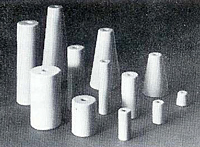
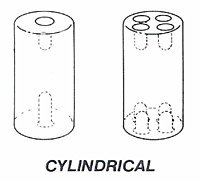
Steatite Cylindrical Light Duty Standoff Insulators
Mandatory attribute "id" is not specified. Shortcode usage example:Uses & Applications
Steatite Cylindrical Light Duty Standoff Insulators from LSP Industrial Ceramics are designed for applications requiring reliable electrical insulation and mechanical support in low to moderate voltage environments. These insulators are commonly used in electrical panels and switchgear, where they separate and support busbars, wiring, or other conductive components, preventing unwanted current flow and reducing the risk of short circuits. Their high dielectric strength and ability to withstand temperatures up to 1000°C make them ideal for use in telecommunications equipment, such as antenna assemblies, where they insulate and support lightweight components while resisting environmental stressors like moisture and temperature fluctuations. Available in various sizes with customizable mounting holes, these insulators ensure versatility across a range of setups.
In addition to electrical applications, Steatite Cylindrical Light Duty Standoff Insulators are employed in industrial machinery and laboratory equipment, where their low thermal conductivity and chemical inertness provide added benefits. For instance, in laboratory furnaces or ovens, they support heating elements or thermocouples, maintaining precise positioning while enduring high temperatures without degrading. Their glazed surface—available in white or brown—enhances durability and prevents surface conduction by contaminants, making them suitable for harsh environments like chemical processing plants. LSP Industrial Ceramics offers these insulators with radii on all corners and optional permanent markings, ensuring both functionality and ease of integration into custom designs for light-duty applications.
Performance Requirements for Cylindrical Light Duty Standoff Insulators
Steatite standoff insulators must maintain stable electrical separation while supporting components in compact assemblies. Their performance depends on consistent dielectric behavior, uniform geometry, and reliable surface finish. In low-to-moderate voltage settings, these insulators help maintain spacing between conductive parts, reducing the chance of unintended current paths. Thermal stability is also important, as the ceramic must retain strength when exposed to elevated temperatures during operation.
Material and Construction Considerations
Steatite ceramic provides a combination of hardness, electrical resistance, and dimensional stability. The fired body must achieve a dense structure that limits porosity and supports long-term insulation. Glazed surfaces help reduce surface contamination and maintain resistance in environments with humidity or airborne particles. Machined mounting holes require tight tolerances to ensure proper hardware fit, and radiused corners help distribute stress to reduce edge damage during installation.
Fit for Electrical and Mechanical Applications
- Panel spacing — Supports components that require controlled separation without adding weight.
- Terminal support — Helps maintain alignment in compact electrical assemblies.
- Light mechanical positioning — Provides stable placement for parts exposed to moderate vibration.
- Anti-rotation setups — Locking hole options assist with retention in assemblies that need added stability.
FAQ
How Does Glazing Affect Electrical Behavior?
Glazing helps maintain surface resistance by reducing moisture absorption and limiting buildup of contaminants.
Are These Insulators Suitable for Light Mechanical Loads?
Yes. Their ceramic construction and cylindrical shape provide stable support for components that require positional accuracy without heavy structural demands.
What Environments Benefit from Steatite Construction?
Steatite performs well in settings with elevated temperatures, moderate vibration, or exposure to humidity and dust due to its thermal stability and low moisture absorption.
Do Radiused Corners Improve Durability?
Yes. Radiused corners help reduce stress points, improving resistance to chipping during installation or repeated handling.